

Languages: English | Русский | العربية | Español | Tiếng Việt | 한국어
Ceramic tile is one of the most traditional and widely used tile materials in the construction and interior design industry. It is valued for its versatility, decorative possibilities, and cost effectiveness.
Understanding what ceramic tile is and how it differs from porcelain tile can help you select the right material for walls and specific indoor applications.
What Is Ceramic Tile?
Ceramic tile is made from natural clay, sand, and minerals. After shaping, the tile is fired in a kiln at high temperatures, but generally lower than those used for porcelain tiles.
Because of this manufacturing process, ceramic tiles are lighter and slightly more porous than porcelain tiles, making them easier to cut, install, and handle.
Key Features of Ceramic Tile
Decorative Variety
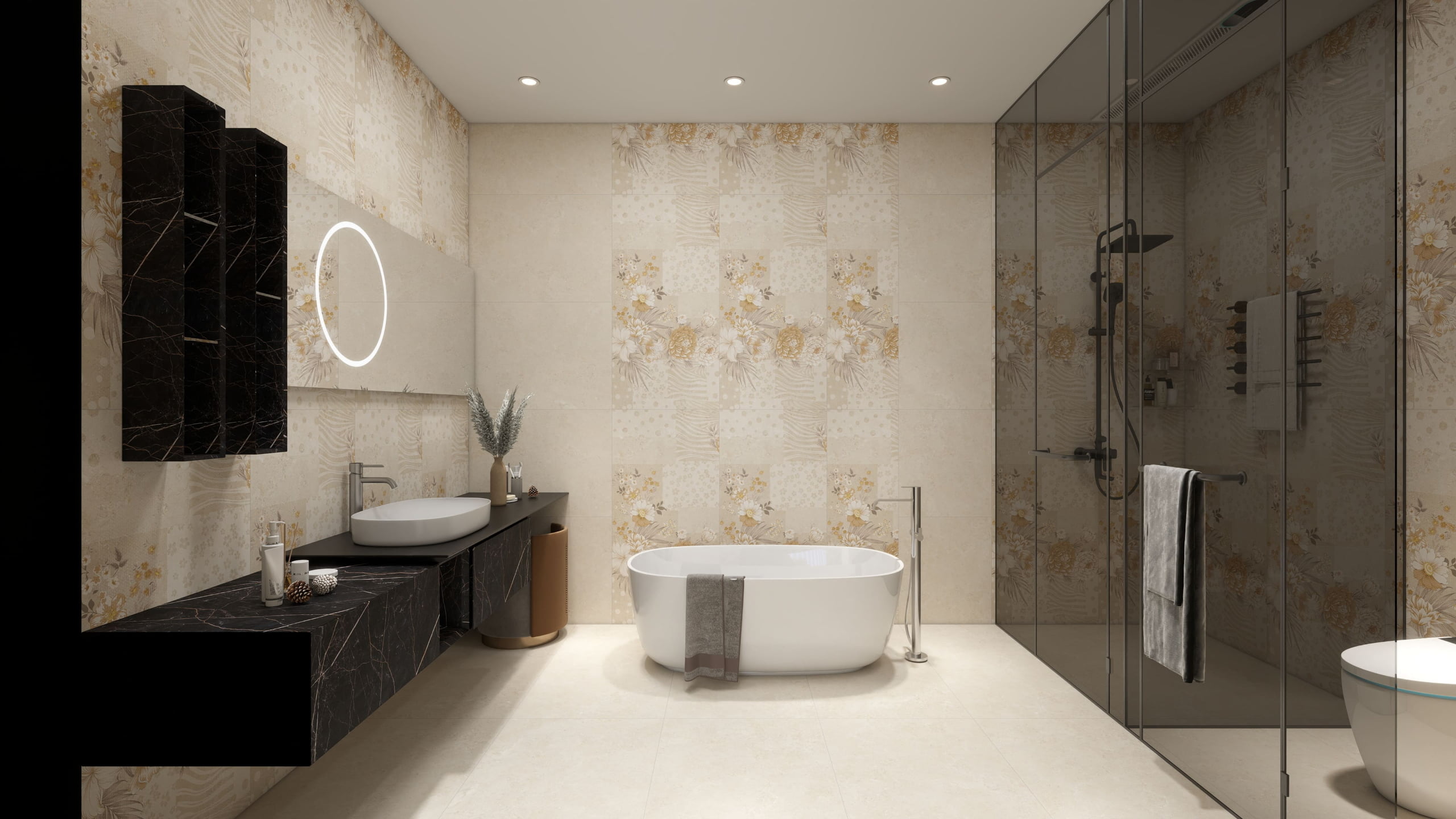
Ceramic tiles offer a wide range of colors, patterns, textures, and surface finishes, especially glossy and decorative designs.
Lightweight and Easy Installation
Compared to porcelain tiles, ceramic tiles are easier to cut and install, which can reduce installation time and labor costs.
Cost Effective
Ceramic tiles are generally more affordable than porcelain tiles, making them a popular choice for residential projects.
Suitable for Indoor Use
Ceramic tiles are best suited for indoor wall applications and low-traffic areas.
Common Applications of Ceramic Tile
Ceramic tiles are commonly used in:
- Bathroom walls
- Kitchen backsplashes
- Decorative feature walls
- Residential wall applications
- Light-use floor areas, depending on specifications
Ceramic Tile vs Porcelain Tile
Compared with porcelain tiles, ceramic tiles have higher water absorption and lower density. While porcelain tiles are preferred for flooring and heavy-use areas, ceramic tiles remain an excellent option for wall decoration and interior design.
Conclusion
Ceramic tile is a practical and decorative material for interior spaces. Its design flexibility, ease of installation, and affordability make it a popular choice for wall applications in residential and commercial projects.
Русский
Керамическая плитка — это классический отделочный материал, широко используемый в интерьерах. Она изготавливается из натуральной глины и обжигается при высокой температуре.
Керамическая плитка легче и более пористая по сравнению с керамогранитом, что делает её удобной для настенной облицовки и декоративных решений внутри помещений.
العربية
بلاط السيراميك هو أحد أكثر أنواع البلاط شيوعًا في أعمال البناء والتصميم الداخلي. يتم تصنيعه من الطين الطبيعي والمعادن ويتم حرقه في أفران خاصة.
يتميز بلاط السيراميك بخفة الوزن وتنوع التصاميم، ويُستخدم بشكل أساسي في الجدران والمساحات الداخلية ذات الاستخدام الخفيف.
Español
El azulejo cerámico es uno de los materiales más tradicionales y utilizados en la construcción y el diseño de interiores. Se fabrica a partir de arcilla natural y minerales, y se cuece en hornos a altas temperaturas.
Las baldosas cerámicas son más ligeras y ligeramente más porosas que las baldosas de porcelana, lo que las hace ideales para aplicaciones en paredes y espacios interiores con tráfico ligero.
Tiếng Việt
Gạch ceramic là một trong những vật liệu ốp lát truyền thống và được sử dụng rộng rãi trong xây dựng và thiết kế nội thất. Gạch được sản xuất từ đất sét tự nhiên và khoáng chất, sau đó nung ở nhiệt độ cao.
So với gạch porcelain, gạch ceramic nhẹ hơn và có độ hút nước cao hơn, phù hợp cho ốp tường và các khu vực trong nhà có mật độ sử dụng thấp.
한국어
세라믹 타일은 건축 및 인테리어 디자인 분야에서 가장 널리 사용되는 전통적인 타일 소재 중 하나입니다. 천연 점토와 광물을 원료로 하여 고온의 가마에서 소성됩니다.
세라믹 타일은 포셀린 타일에 비해 가볍고 흡수율이 다소 높아, 실내 벽면과 사용 빈도가 낮은 공간에 적합합니다.