

Languages: English | Русский | العربية | Español | Tiếng Việt | 한국어
Porcelain tile and ceramic tile are two of the most commonly used materials in the tile industry. Although they look similar, they differ significantly in composition, performance, and application.
Understanding the difference between porcelain tile and ceramic tile will help you choose the right material for your project.
Raw Materials and Manufacturing
Porcelain tile is made from refined clay and fired at extremely high temperatures, resulting in a dense and hard body. Ceramic tile is produced from natural clay and minerals and fired at a lower temperature, making it lighter and more porous.
Density and Water Absorption
Porcelain tiles have a very low water absorption rate, usually below 0.5%. This makes them suitable for wet areas and outdoor use. Ceramic tiles have higher water absorption and are mainly recommended for indoor applications.
Strength and Durability
Porcelain tiles are stronger and more resistant to wear, scratches, and impact. They are ideal for high-traffic areas. Ceramic tiles are better suited for walls and low-traffic spaces.
Design and Appearance
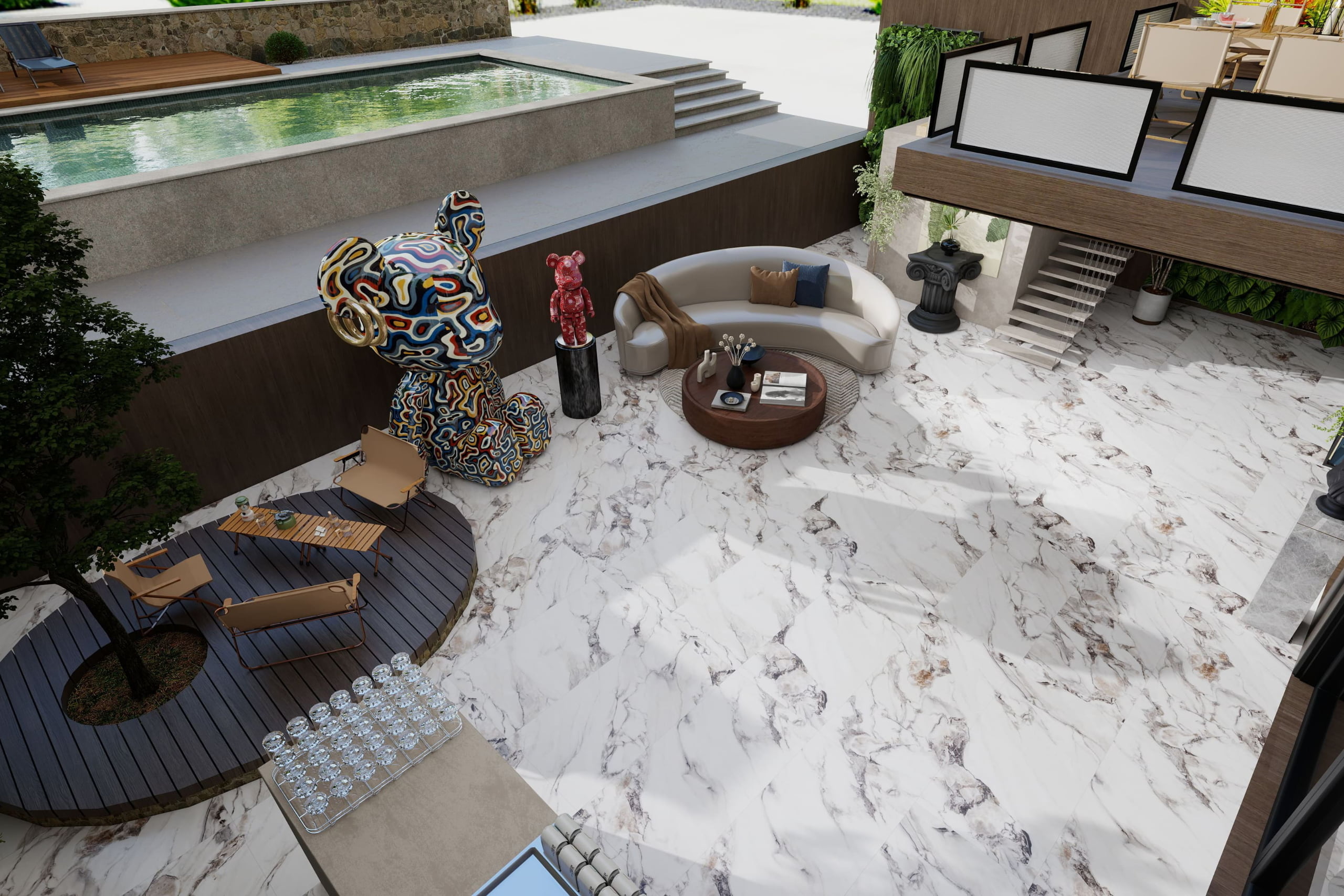
Both porcelain and ceramic tiles offer a wide range of designs, colors, and finishes. However, porcelain tiles can more realistically replicate natural stone, marble, wood, and concrete.
Application Areas
Porcelain Tile
- Floor and wall applications
- Bathrooms and kitchens
- Commercial and public spaces
- Suitable for indoor and outdoor use
Ceramic Tile
- Wall applications
- Kitchen backsplashes
- Decorative indoor areas
- Residential spaces with light use
Which One Should You Choose?
Choose porcelain tile if you need durability, low water absorption, and long-term performance. Choose ceramic tile if your project focuses on wall decoration, design flexibility, and cost efficiency.
Conclusion
Both porcelain tile and ceramic tile have their advantages. Selecting the right tile depends on the application, environment, and performance requirements of your project.
Русский
Керамогранит и керамическая плитка — два наиболее распространённых материала в плиточной индустрии. Несмотря на внешнее сходство, они отличаются по плотности, водопоглощению и области применения.
Керамогранит более плотный и прочный, подходит для полов и помещений с высокой нагрузкой. Керамическая плитка легче и чаще используется для облицовки стен и декоративных интерьеров.
العربية
يُعد بلاط البورسلان وبلاط السيراميك من أكثر أنواع البلاط استخدامًا. وعلى الرغم من التشابه في الشكل، إلا أنهما يختلفان من حيث الكثافة ومعدل امتصاص الماء والاستخدام.
يتميز بلاط البورسلان بمتانة عالية ومقاومة ممتازة، مما يجعله مناسبًا للأرضيات والمساحات ذات الاستخدام المكثف، بينما يُستخدم بلاط السيراميك بشكل أساسي للجدران والمساحات الداخلية الخفيفة.
Español
El porcelanato y el azulejo cerámico son dos materiales muy utilizados en la industria del revestimiento. Aunque pueden parecer similares, presentan diferencias claras en resistencia, absorción de agua y aplicaciones.
El porcelanato es más denso y duradero, ideal para suelos y zonas de alto tránsito. El azulejo cerámico es más ligero y se utiliza principalmente en paredes y espacios interiores.
Tiếng Việt
Gạch porcelain và gạch ceramic là hai loại vật liệu ốp lát phổ biến nhất hiện nay. Mặc dù có vẻ ngoài tương tự, nhưng chúng khác nhau về độ bền, độ hút nước và mục đích sử dụng.
Gạch porcelain có độ đặc chắc cao, phù hợp cho lát sàn và khu vực có mật độ sử dụng cao. Gạch ceramic nhẹ hơn, thường dùng cho ốp tường và không gian trong nhà.
한국어
포셀린 타일과 세라믹 타일은 가장 널리 사용되는 두 가지 타일 소재입니다. 외관은 비슷하지만 밀도, 흡수율, 적용 범위에서 차이가 있습니다.
포셀린 타일은 내구성과 강도가 높아 바닥과 사용 빈도가 높은 공간에 적합하며, 세라믹 타일은 주로 벽면과 실내 장식용으로 사용됩니다.